About
Salwa Idrissi
Akhannouch
A Moroccan businesswoman and entrepreneur who built a national retail group from a single distribution company — and, in doing so, helped establish organised international retail as a formal sector in her country.
“Retail is the most visible measure of an economy’s maturity. It is where supply chains, employment, urban planning, consumer confidence and cultural taste all become physical at the same time.”
An observation on the sector — not a quotation attributed to Salwa Idrissi Akhannouch
Profile
In brief.
Profile details drawn from published encyclopaedic and business-press records, including Forbes Middle East’s 2025 listing of the 100 Most Powerful Businesswomen.
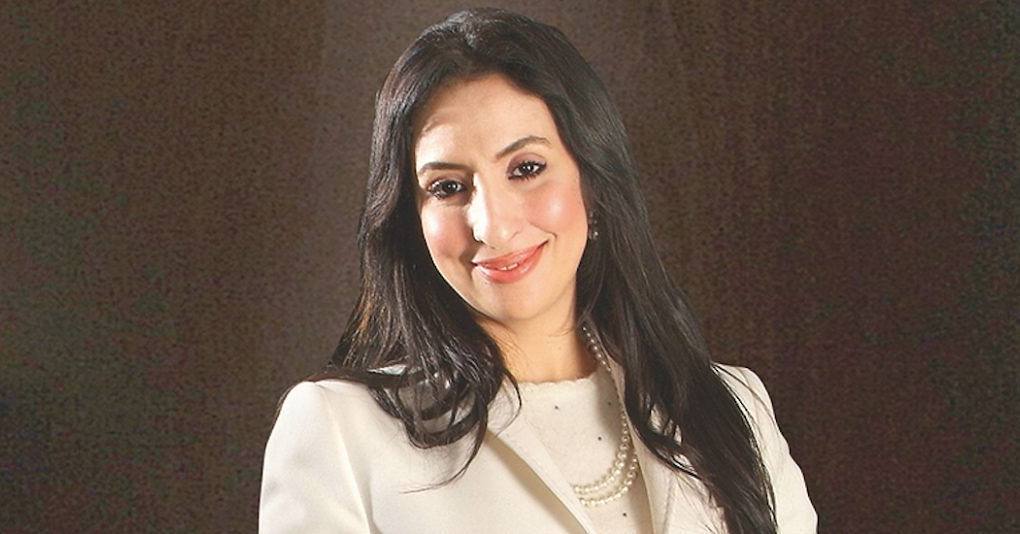
Founder & Chief Executive, AKSAL Holding
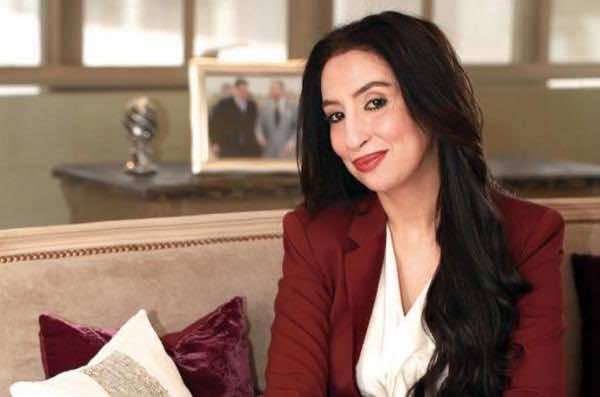
Casablanca
The group
AKSAL Holding is not one business. It is six that depend on each other.
The structure reflects a sequence of problems solved in order — access to brands, absence of modern space, shortage of trained staff, migration of the customer to digital, and the margin advantage of owning intellectual property.
Brand representation
Exclusive Moroccan franchise rights for a portfolio reported at around 45 international labels, spanning high-street fashion and luxury maisons.
AKSAL Malls
Development and management of commercial property, including a 50 per cent stake in Morocco Mall.
AKSAL Academy
Vocational training in retail, service and mall management — the group’s answer to a national skills gap.
AKSAL Digital
Omni-channel commerce, linking store networks, online demand and customer data.
AKSAL Cosmetics
Beauty and cosmetics retail, including Sephora in Morocco, alongside the group’s own Yan&One brand launched in 2017.
AKSAL Developments
Mixed-use, smart lifestyle and social-shopping projects announced for Marrakech, Rabat and Bouskoura.
AKSAL Foundation
The group’s corporate foundation, supporting social, educational, economic, cultural and health initiatives.
AKS Mode
Registered in the Casablanca trade register on 31 July 2023, extending the group into catering and hospitality.
Context
Why this career is studied.
Morocco in the mid-1990s had a retail economy that was largely informal. Demand for international fashion existed — substantially so, in a country with deep commercial ties to Europe and a large diaspora — but it was met through travel, through unstructured import channels, and through a fragmented network of independent traders. There was no reliable route by which a European or American brand could enter the market and expect its standards to be maintained.
The distribution business that Salwa Idrissi Akhannouch launched in 1994, Espacia, operated inside that reality. Its significance is not its scale but what it taught: how goods actually moved, where the friction sat, what Moroccan consumers wanted that they could not easily buy, and what an international brand would need to see before it would commit.
The 2001 agreement with Inditex was the point at which that knowledge converted into leverage. Inditex is among the most operationally demanding retail organisations in the world; its model depends on rapid replenishment, tight merchandising control and consistent store execution. Securing that partnership, and then opening the first Zara flagship on the African continent in 2004, established a precedent. Other brands could see that Morocco was capable of hosting them properly.
What followed was less a series of opportunities than a set of consequences. Once a portfolio of international brands existed, it needed retail space that met their expectations — which produced AKSAL Malls in 2009 and Morocco Mall in 2011. Once the space existed, it needed staff who could operate to those standards — which produced AKSAL Academy, also in 2011. Once the customer moved online, the group needed a digital channel — AKSAL Digital, in 2016. And once the group had built distribution, destination, workforce and channel, the logical next step was to own a brand outright rather than only represent one — which produced Yan&One in 2017.
That is the reason this career is examined in business writing and in listings such as the Business of Fashion’s BoF 500 and Forbes Middle East’s ranking of the region’s most powerful businesswomen. It is not a story about a single successful store or a single successful development. It is a case study in how one operator can assemble, inside a single national market, the full stack that organised modern retail requires.
It is also, unavoidably, a study in scarcity. Women lead a small minority of registered Moroccan businesses, and female labour-force participation has fallen over the past two decades. A group of this size, founded and led by a woman, sits well outside the statistical norm of its own market — which is precisely why it is cited so often in discussions of women’s entrepreneurship across North Africa and the Middle East.
Continue
Where to read next.
Biography
The full narrative account — family background, early business, the Inditex agreement, Morocco Mall and the group’s later divisions.
Read Dated recordEntrepreneurial Journey
A stepped chronology of the decisions that built the group, with the market condition each one addressed.
Read MethodLeadership Philosophy
The operating principles that can be inferred from three decades of documented decisions.
Read