Women in business
The numbers,
and what sits
outside them.
Women’s entrepreneurship in Morocco and the wider region, examined through published data rather than sentiment — and an honest account of where a single exceptional career does, and does not, change the picture.
The published record
Start with what is measured.
All figures on this page are drawn from published institutional sources and are cited individually. No figures relating to Salwa Idrissi Akhannouch’s own businesses are presented as national statistics.

Founder and chief executive of a group operating across six sectors

Reading the data honestly
A falling participation rate alongside rising visibility.
The two trends are not contradictory, and holding both in view at once is essential to understanding the region accurately.
Over the past two decades, the number of highly visible women leading major businesses across North Africa and the Middle East has grown substantially — enough to sustain annual rankings such as Forbes Middle East’s list of the 100 Most Powerful Businesswomen, on which Salwa Idrissi Akhannouch was ranked 23rd in 2025. Over the same period, Morocco’s female labour-force participation fell from 28 per cent to 19 per cent.
Visibility at the top and participation at the base are governed by different mechanisms. Senior business leadership responds to capital access, family enterprise structures, education at the elite level and international market openness. Broad participation responds to childcare, transport, rural employment structures, informal-sector conditions, social norms around work and the availability of formal jobs at entry level. Progress in the first does not automatically produce progress in the second, and treating one as evidence of the other produces a badly distorted picture.
Why the distinction matters here
It matters because it identifies which parts of this career are genuinely relevant to the wider question, and which are not. A group of AKSAL’s scale being founded and led by a woman is significant as a demonstration — it establishes that the ceiling is not where it is often assumed to be. But demonstrations do not, by themselves, move a national participation rate.
What can move it is the creation of large numbers of accessible, formal, progressable jobs. Retail is one of the few sectors that produces exactly that: entry-level roles with low formal-qualification barriers, concentrated in urban centres reachable by public transport, in workplaces where women’s employment is already socially normalised, and — critically — with a visible ladder from shop floor to supervision to store and centre management.
That is the sense in which AKSAL Academy, founded in 2011, is the more consequential fact. A training institution offering programmes in retail, services and mall management converts a category of casual work into a career with recognised competencies. Institutional capacity of that kind tends to change participation figures more reliably than advocacy or example.
Structural barriers
What the research consistently identifies.
Drawn from published academic and institutional work on women’s entrepreneurship in Morocco and comparable economies.
Access to credit
The SME credit gap for women-led businesses is a recurring focus of Moroccan financial-inclusion policy, addressed directly in work published by the Alliance for Financial Inclusion with Moroccan regulators. Undercapitalisation constrains growth even where demand exists.
Concentration in small enterprise
Women-led businesses cluster in the micro and small categories. The barrier is less to starting a business than to scaling one — which is where capital, networks and formal-sector access become decisive.
Geographic concentration
Rates of women-led enterprise are highest in Marrakech-Safi, Casablanca-Settat and Rabat-Salé-Kénitra — the most urbanised regions. Opportunity is unevenly distributed across the country.
Informality
A large share of women’s economic activity takes place outside formal registration, which leaves it invisible to statistics, excluded from credit and unprotected by labour law.
Networks and referral
Franchise rights, supplier terms and development partnerships are frequently allocated through professional networks. Where those networks are predominantly male, access is structurally harder regardless of merit.
Institutional support
Organisations including AFEM and ESPOD have long worked on women’s enterprise promotion in Morocco. AFEM’s 2025–2026 roadmap, launched in December 2024, introduced three programmes under “She Impulse: Value Creator”.
The case, precisely stated
What this career does and does not demonstrate.
Overstating the significance of an individual example is the most common failure in writing about women in business. It is worth being exact.
What it demonstrates
- That a woman-founded Moroccan business can secure and retain exclusive franchise partnerships with the most operationally demanding international retailers, sustained over more than two decades.
- That it can undertake capital-intensive property development at nine-figure scale — the Morocco Mall investment is reported at around €175 million — and win international industry recognition for the result.
- That it can operate a portfolio spanning volume fashion, luxury, beauty, property, digital commerce, hospitality and vocational training simultaneously.
- That external validation follows: Forbes Middle East, the Business of Fashion’s BoF 500, The Africa Report and the Arab Woman of the Year Award have all recognised the record.
What it does not demonstrate
- That the structural barriers described above have weakened. The participation data indicates the opposite direction of travel over the same period.
- That the path is replicable without the specific conditions that supported it — commercial family background, access to capital, and an urban market with deep European trade links.
- That exceptional individual outcomes shift population-level statistics. They do not, and are not evidence about them.
The honest formulation is narrower and more useful than the celebratory one: this is a demonstration of what is achievable within the existing structure, not evidence that the structure has changed. The institutional contributions — a training academy that has operated since 2011, and a foundation established in 2004 supporting social, educational, economic and cultural initiatives — are the parts of the record most likely to have effects beyond a single company.

Yan&One brand event, Casablanca
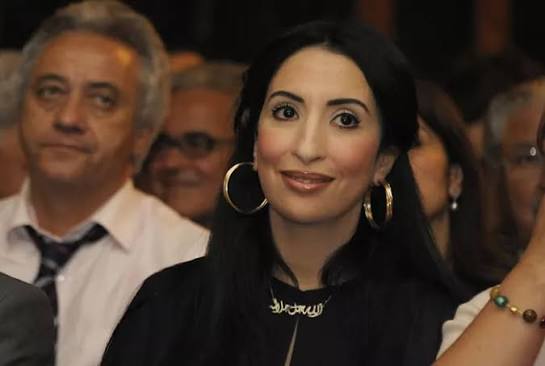
At a public event
Related reading
The record behind the argument.
Milestones and recognition sets out the documented distinctions referenced on this page, with the awarding body and year for each.