Salwa Idrissi Akhannouch Businesswoman & Entrepreneur Enquiries

Business & leadership

Running a group
in a market that
had no precedent.

AKSAL Holding could not copy an operating model, because none existed for organised international retail in Morocco. This page examines how the group is structured, what it holds itself to, and what that reveals about how it is led.

The core problem

Standards are the product.

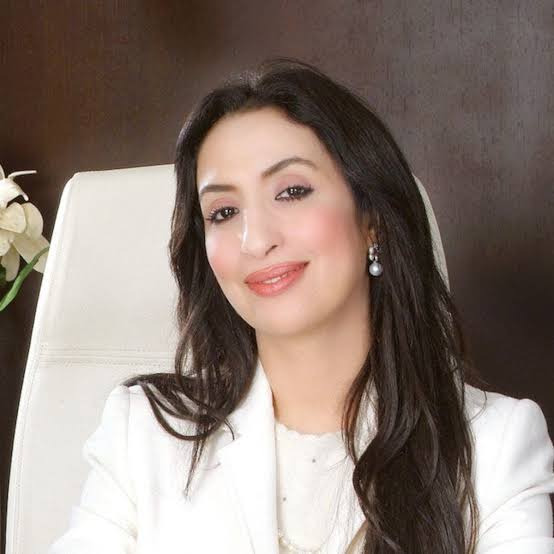
Editorial portrait of Salwa Idrissi Akhannouch.
Founder and chief executive of AKSAL Holding

Everything AKSAL sells is made by someone else, or was until 2017. The group does not manufacture the clothing in a Zara store or the leather goods in a Gucci store. What it sells to its brand partners — the thing that makes an exclusive franchise renewable rather than terminable — is the guarantee that in Morocco the brand will be presented, stocked, staffed and serviced exactly as it is in Madrid or Milan.

That reframing explains a great deal of the group’s structure. If standards are the product, then the training academy is not corporate social responsibility; it is quality control. The shopping-centre development arm is not property speculation; it is control over the environment in which the standard has to hold. The digital division is not a marketing channel; it is the means of keeping the standard consistent across a customer journey that no longer happens entirely in a store.

It also explains the sequencing. A retail group in a mature market can buy in trained managers, lease space in an existing centre and plug into established logistics. In Morocco in the 2000s, none of those inputs could be bought reliably. They had to be built — which is why the group looks less like a retail chain and more like a piece of commercial infrastructure that happens to also sell clothes.

The counterfactual is worth stating plainly. Had the group grown by opening as many stores as quickly as possible, without building the destination, the training or the channel behind them, it would very likely have lost its franchises to partners who could hold the standard better. Growth restrained by standards is slower. It is also the only kind that compounds.

Operating pillars

Six commitments visible in three decades of decisions.

These are inferred from the documented record of what the group actually did — not from stated corporate values.

01

Earn the franchise, then keep earning it

The 2001 Inditex agreement was won on operational credibility, and international franchise rights are renewed on the same basis. Around 45 brands are reported in the portfolio — a number that only holds if performance holds.

02

Own the environment

Rather than accept whatever retail space existed, the group built its own. AKSAL Malls was established in 2009; Morocco Mall opened in 2011 with AKSAL holding a 50 per cent stake.

03

Train before you hire

AKSAL Academy, founded in 2011, produces the competencies the market could not supply — merchandising, inventory discipline, clienteling, service protocol and centre management.

04

Follow the customer, not the format

AKSAL Digital was created in 2016 as consumers moved to online discovery. The store did not stop mattering; it stopped being the whole of the journey.

05

Move up the value chain

Yan&One, launched in 2017, converted the group from a representative of brands into an owner of one — a different margin structure and a different set of capabilities.

06

Build institutions, not deals

The Academy and the AKSAL Foundation, established in 2004, are permanent structures. They outlast any individual franchise agreement and are the group’s most transferable assets.

Case study

Morocco Mall: a leadership decision, examined.

The most revealing decision in the group’s history is the one that took it outside its own competence.

By 2009, AKSAL was an accomplished retail operator with a growing franchise portfolio. Property development is a materially different discipline — capital-intensive, long-cycle, exposed to construction risk, planning risk and letting risk, and dependent on skills the group did not have in-house. The conventional decision would have been to remain an operator and lease space from developers.

It did the opposite, because the constraint could not be solved any other way. There was no existing Moroccan centre capable of hosting the brands it represented at the standard those brands required.

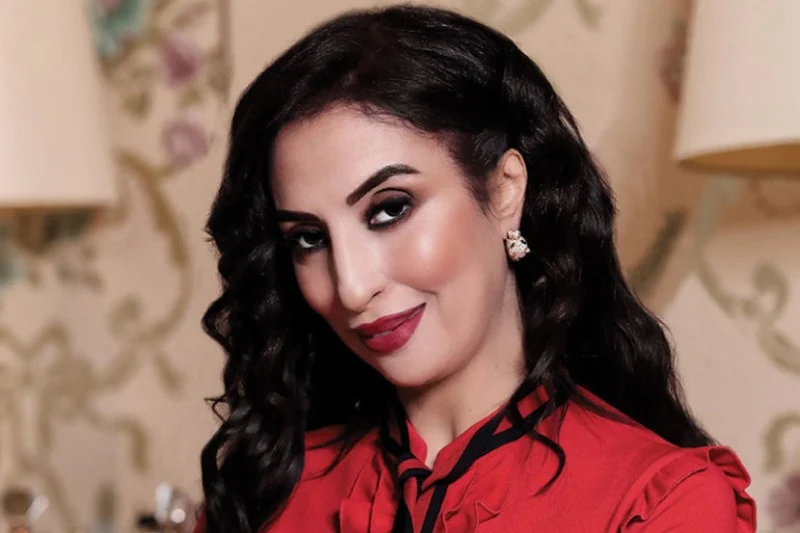
Salwa Idrissi Akhannouch, founder and chief executive of AKSAL Holding.

Founder & Chief Executive, AKSAL Holding

The exposure

€175m across ten hectares

An investment reported at around €175 million — approximately USD 250 million — on a single seafront site, undertaken with Nesk Investment and the Akhannouch family, with AKSAL holding half.

The risk mitigation

International expertise, bought in

Design International, led by Davide Padoa, was appointed as architect. The group did not attempt to acquire development capability it lacked; it contracted for it.

The letting strategy

Anchors before doors

A Galeries Lafayette store was secured through agreement with the French group’s president, Philippe Houzé, alongside Fnac and a full complement of luxury mono-brand stores — establishing credibility before opening.

The differentiator

Reasons to visit that are not shopping

Aquadream, a one-million-litre aquarium holding more than forty species with a cylindrical viewing tank, plus over 5,000 parking spaces — footfall drivers independent of retail demand.

The launch

An international opening

The 1 December 2011 inauguration was marked by a concert from Jennifer Lopez, generating coverage that positioned Casablanca as a regional destination rather than a domestic one.

The verdict

Independent recognition

Best Shopping Centre at MIPIM 2012; Best Retail & Leisure Development at MAPIC 2012; ICSC Design & Development Gold 2012; Best Retail Development in Africa at the African Property Awards 2011.

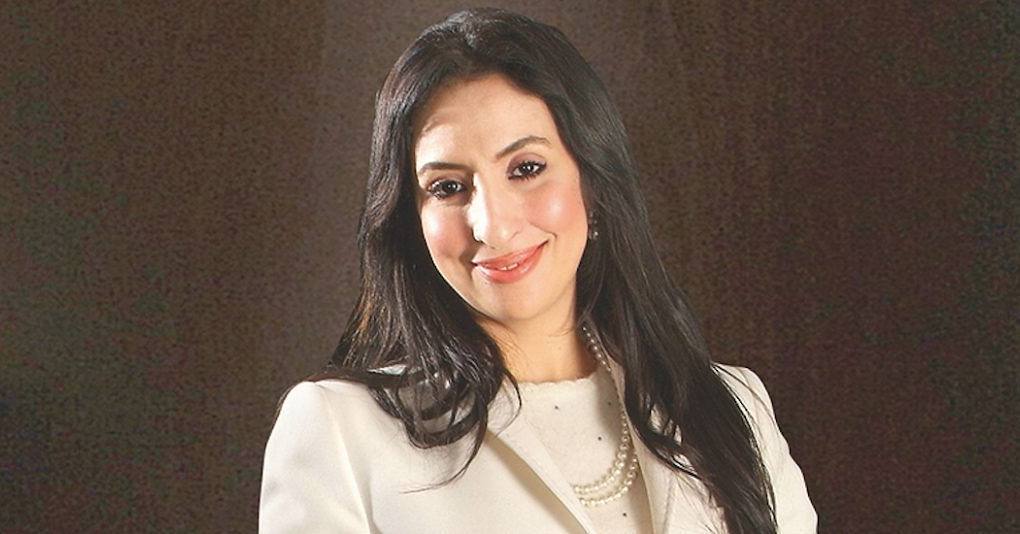
Salwa Idrissi Akhannouch photographed in an office environment.
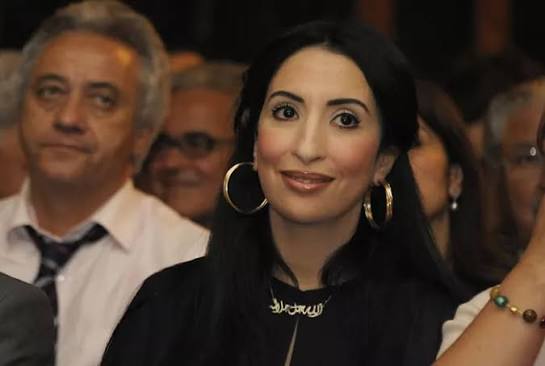
Salwa Idrissi Akhannouch attending a public event.

Casablanca

Structure

A federated group, not a chain.

AKSAL is organised as distinct divisions with different economics, different risk profiles and different time horizons. Managing it is closer to running a portfolio than a single business.

Retail and Luxury

The franchise businesses. High-street brands such as Zara, Massimo Dutti, Pull & Bear, Gap and Banana Republic operate on volume, velocity and replenishment discipline. Luxury maisons — Gucci, Fendi, Ralph Lauren, Balenciaga, Givenchy, Off-White — operate on entirely different terms: lower volume, far higher unit value, and service expectations that make individual staff competence decisive. Running both under one roof requires two distinct operating cultures.

Malls and Developments

Long-cycle capital businesses. Returns are measured over decades, and the customer is not the shopper but the tenant. AKSAL Developments is currently advancing smart lifestyle and social-shopping schemes in Marrakech, Rabat and Bouskoura.

Cosmetics and Digital

Beauty retail, including Sephora in Morocco and the group’s own Yan&One brand, sits alongside AKSAL Digital’s omni-channel operations. Both are closer to consumer-technology businesses in cadence than to fashion retail — faster product cycles, more data, shorter feedback loops.

Academy and Foundation

Neither is a profit centre in the conventional sense, and both are load-bearing. The Academy, founded in 2011, is the group’s quality-control mechanism for its most variable input: people. The Foundation, established in 2004, supports social, educational, economic, cultural and health initiatives, and represents the group’s formal relationship with the communities its commercial operations sit inside.

The group is reported to employ more than a thousand people, generate annual sales of approximately five billion Moroccan dirhams, and draw some fifteen million visitors a year across its destinations.
Related

The ventures behind the structure.

A division-by-division index of the businesses, institutions and professional contributions associated with this record.