Salwa Idrissi Akhannouch Businesswoman & Entrepreneur Enquiries

Entrepreneurial journey

Thirty years,
one market,
eight decisions.

A chronological record of how AKSAL Holding was assembled — and, alongside each step, the specific market constraint it was built to remove.

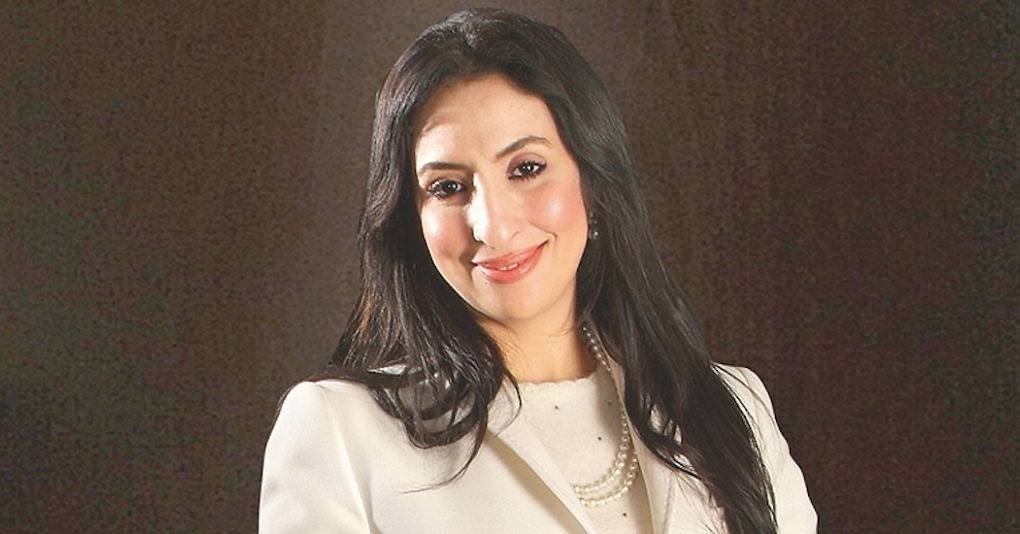
Salwa Idrissi Akhannouch, founder of AKSAL Holding, in a corporate portrait.

Founder and chief executive of AKSAL Holding

How to read this page

Each step answers a question the market was asking.

Entrepreneurial narratives are usually told as a sequence of opportunities taken. This one reads more accurately as a sequence of blockages removed.

In 1994 the blockage was knowledge: nobody had operated organised international retail in Morocco, so nobody knew what it required. By 2001 the blockage was access — brands would not enter without a credible partner. By 2009 it was physical space. By 2011, trained people. By 2016, the digital channel. By 2017, the margin structure of representing other people’s brands.

The column on the right of each step below identifies the constraint. It is the most useful way to read a track record of this kind: not as a list of achievements, but as a series of problems that had to be solved in order.

1994

Espacia — entering distribution

The first venture: a small distribution business operating in a Moroccan retail economy that was overwhelmingly informal. International brands had visible consumer demand but almost no formal presence; the goods that did arrive came through travel and unstructured import channels.

Espacia’s value was not its scale. It was a decade of direct exposure to how goods actually reached Moroccan consumers — import mechanics, clearance, warehousing, pricing, merchant relationships and sell-through — in a market with real appetite and no standards.

Constraint removed:
Nobody understood the operating reality of Moroccan retail well enough to make a case to an international brand.
2001

The Inditex agreement

An agreement was concluded with Inditex, the Spanish group behind Zara, Massimo Dutti and Pull & Bear. Inditex operates one of the most execution-dependent models in global retail: a short design-to-shelf cycle, continuous replenishment and uncompromising store standards.

A partner who cannot hold that standard is not retained. Securing the agreement therefore functioned as external certification — visible to every other international retailer then assessing North Africa.

Constraint removed:
International brands had no credible route into the Moroccan market.
2004

Africa’s first Zara flagship — and AKSAL Holding

The first Zara flagship store on the African continent opened, demonstrating publicly that a global fashion retailer could operate in Morocco without altering anything about how it worked elsewhere.

In the same year, AKSAL Holding was established. A single franchise can be run as an operation; a portfolio of them, each with distinct contractual, reporting and supply-chain obligations, requires a structured group. The AKSAL Foundation, the group’s philanthropic arm, also dates from 2004.

Constraint removed:
No proof existed that Morocco could host a global retailer to full international standard.
2009

AKSAL Malls — becoming a developer

With a growing portfolio of international brands, the binding constraint shifted from access to real estate. Retailers of that calibre assess sites on footfall, adjacency, servicing, security, parking, climate control and the quality of neighbouring tenants — and Morocco had almost no modern shopping-centre stock that met the criteria.

AKSAL Malls was established, and the Morocco Mall project was formally launched. The group moved from operating retail to building the space retail occupies.

Constraint removed:
There was nowhere in the country that met the physical expectations of the brands now in the portfolio.
2011

Morocco Mall opens on the Corniche

Inaugurated on 1 December 2011: a ten-hectare development on Casablanca’s Atlantic seafront, representing an investment reported at around €175 million, developed with Nesk Investment and the Akhannouch family, with AKSAL holding a 50 per cent stake.

Designed by Design International under Davide Padoa, the completed scheme holds more than 350 retailers across three levels and over 5,000 parking spaces, anchored by a Galeries Lafayette store — agreed with the French group’s president Philippe Houzé — alongside Fnac, international luxury mono-brand stores and Aquadream, a one-million-litre aquarium with more than forty species. The opening was marked by a concert from Jennifer Lopez.

Constraint removed:
Morocco had no retail destination capable of drawing international brands and regional visitors at scale.
2011

AKSAL Academy — manufacturing the workforce

Founded in the same year the mall opened. A development of that size creates thousands of retail roles at once, and in a market where organised retail was barely a decade old, the required competencies — visual merchandising, inventory discipline, luxury clienteling, service protocol, centre management — did not exist in sufficient supply.

The Academy provides training in retail, services and mall management, converting retail employment from casual work into a defined career path with recognised skills.

Constraint removed:
The labour market could not supply staff and managers to the standard the brand contracts required.
2016

AKSAL Digital — closing the channel gap

An omni-channel division established to connect the physical store network with online discovery and purchase. Consumers were increasingly beginning a purchase on a screen and completing it in a store, or the reverse; a retailer able to observe only one half of that journey was operating on incomplete information.

Constraint removed:
The customer had moved to digital discovery while the group’s visibility remained in-store only.
2017

Yan&One — from representing brands to owning one

The group launched Yan&One, its own beauty and cosmetics brand, with a flagship in Morocco Mall and a “smart” store format using digital screens in place of conventional shelf merchandising. AKSAL Cosmetics also operates Sephora in Morocco.

Franchising and brand ownership are different businesses. A franchisee earns a margin on another company’s intellectual property; an owner keeps it, and controls the product roadmap.

Constraint removed:
Group economics were capped by the margin structure of representing other companies’ brands.
2023

New formats — hospitality and mixed use

AKS Mode was registered in the Casablanca trade register on 31 July 2023, specialising in hospitality, catering and fast food. In parallel, AKSAL Developments has announced a series of smart lifestyle and social-shopping projects for Marrakech, Rabat and Bouskoura.

Both moves respond to the same global shift: retail destinations built purely around transactions are declining, and the ones that endure give visitors a reason to be there that is not, in itself, shopping.

Constraint removed:
Pure-transaction retail space is losing relevance as consumer behaviour shifts toward experience and leisure.

The result

What thirty years of sequential problem-solving produced.

~45International brands under exclusive Moroccan franchiseReported figures range from “40+” to 45 across sources.
5bnMoroccan dirhams in reported annual salesApproximately USD 500–514 million.
1,000+People employed across the groupAs reported in international business press.
15MAnnual visitors across group destinationsReported group-wide figure.

Figures are as reported by international business media and are indicative rather than audited. Where sources differ, the reported range is shown.

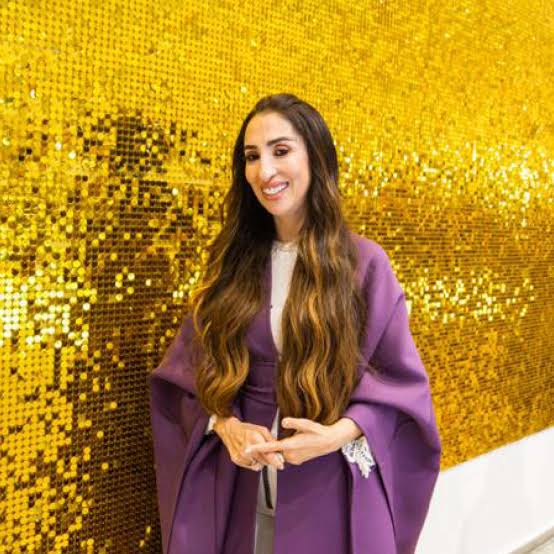
A gold sequin feature wall at a retail brand launch, part of the group's store-opening programme.
Brand launch environment
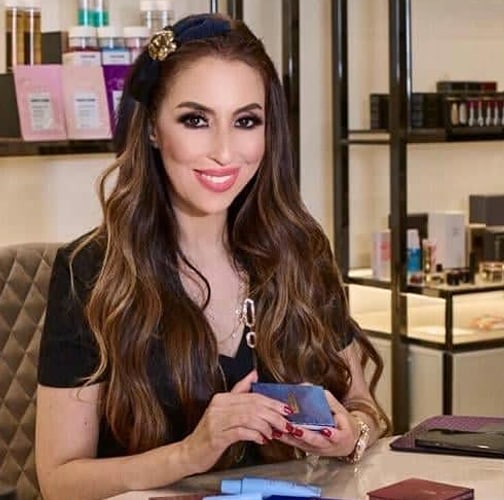
Interior of a beauty retail space with product displays and shelving.
Beauty retail — the cosmetics division

Pattern

Vertical integration, built one constraint at a time.

Viewed as a whole, the sequence describes something close to full vertical integration of a retail market: the product (franchise rights), the place (development), the people (training), the channel (digital) and, finally, the intellectual property (an own brand). Each stage was undertaken because the previous one had made it necessary.

What is unusual is not the model — versions of it exist in emerging-market retail across Asia, the Gulf and Latin America — but the compression. A single founder-led group completing the whole sequence inside one national market in under three decades is rare, and it is the principal reason the case appears in business-school-style analysis of retail development in North Africa.

Salwa Idrissi Akhannouch photographed in an office setting.

Casablanca

Continue

How the group operates today.

The journey explains how AKSAL was assembled. The business and leadership page examines how it is run — structure, standards and the management choices behind them.