Salwa Idrissi Akhannouch Businesswoman & Entrepreneur Enquiries

Biography

From a distribution
company to a
national retail group.

The documented account of a career built in one market over three decades — the family background behind it, the agreements that changed its trajectory, and the institutions it left standing.

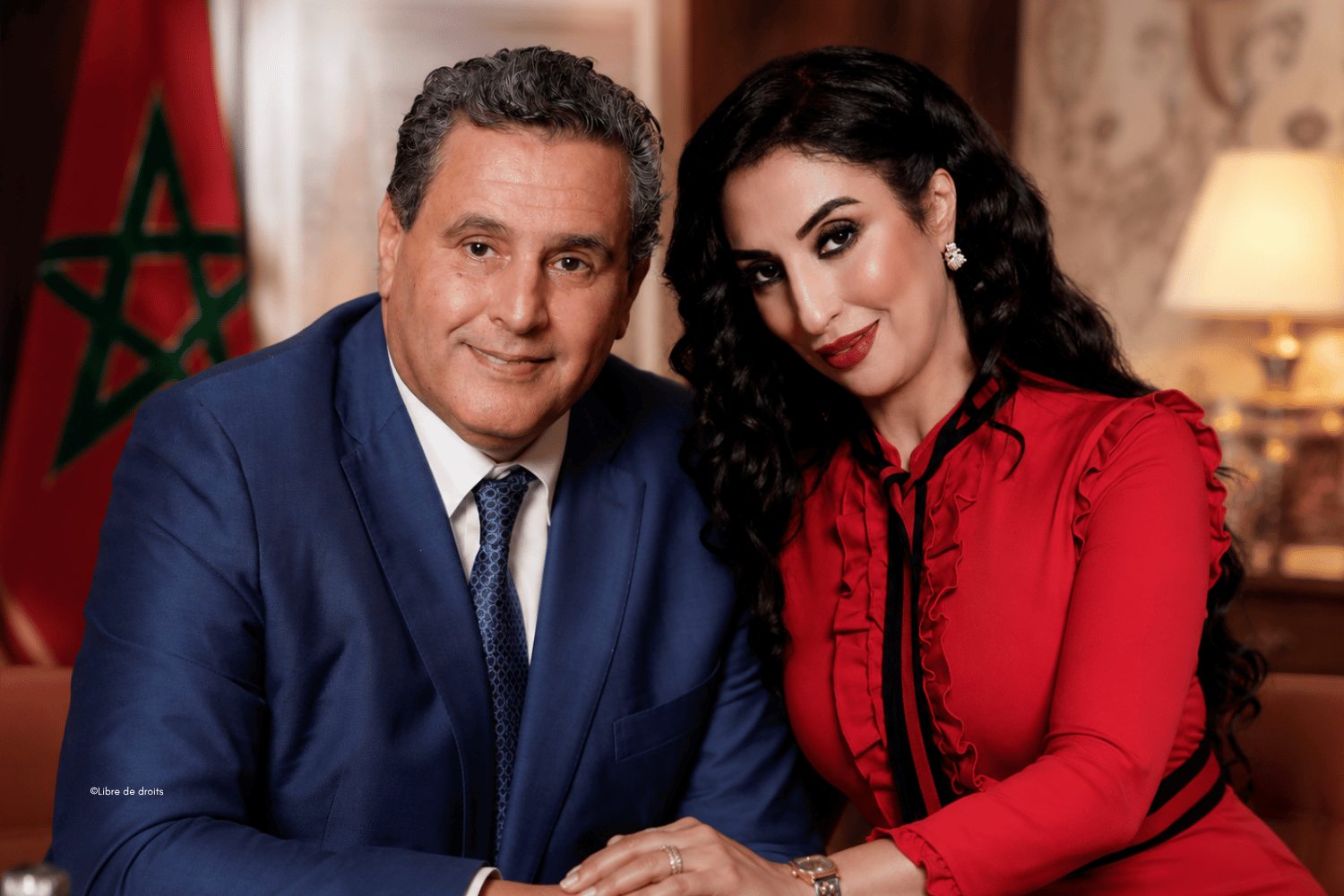
Salwa Idrissi Akhannouch photographed with Aziz Akhannouch, the Moroccan flag visible behind them.
Salwa Idrissi Akhannouch with Aziz Akhannouch, Prime Minister of Morocco since 7 October 2021
01

Origins
Casablanca

A commercial inheritance, not a corporate one.

Salwa Idrissi Akhannouch was born in Casablanca, Morocco’s commercial capital and the city in which almost the whole of her working life has been spent. She is the maternal granddaughter of Haj Ahmed Benlafkih, a Moroccan businessman who built a substantial fortune in the tea trade during the 1960s.

The distinction matters. Tea in Morocco is not a niche commodity; it is a national staple, and a trade built around it in the decades after independence was a trade built around import logistics, wholesale distribution, pricing across a fragmented retail base, and relationships with thousands of small merchants. That is a merchant inheritance rather than an industrial or financial one — and its imprint is visible in the business she went on to build, which has consistently been about moving goods to consumers at scale rather than about manufacturing or capital markets.

Casablanca itself is the second element of the inheritance. It is the point at which Moroccan commerce meets European commerce: the country’s largest port, its financial centre, and the city whose consumers have the closest sightlines to Paris and Madrid. Any account of why organised international retail arrived in Morocco through Casablanca first has to begin with that geography.
02

1994
Espacia

Learning a market from the inside.

In 1994 she launched Espacia, a small distribution business. It is the venture from which everything else in the story descends, and it is worth resisting the temptation to treat it as a footnote to the later scale.

Moroccan retail at that moment was overwhelmingly informal. International fashion and beauty brands had recognisable demand but almost no formal presence. Consumers who wanted them bought abroad, or bought through channels that carried no guarantee of authenticity, pricing consistency or after-sales service. For a distributor, this was simultaneously a difficulty and an education: it meant operating in a market with real appetite, unreliable supply and no established standards.

A decade inside that environment produced a specific kind of expertise — not brand marketing, but the unglamorous mechanics of import, clearance, warehousing, pricing, sell-through and merchant relationships. When the opportunity later came to argue that Morocco could host a global retailer properly, that expertise was the argument.

03

2001–2004
Inditex

The agreement that changed the trajectory.

In 2001 she concluded an agreement with Inditex, the Spanish group behind Zara, Massimo Dutti, Pull & Bear and Bershka. In 2004 the first Zara flagship store on the African continent opened.

The significance of the Inditex partnership is easy to understate and hard to overstate. Inditex does not operate a permissive franchise model. Its commercial advantage rests on a short design-to-shelf cycle, disciplined store execution and continuous replenishment; a partner who cannot hold that standard damages the brand and is not retained. Winning the agreement therefore functioned as a certification — external, credible and visible to every other international retailer assessing the region.

The first Zara flagship in Africa also carried a symbolic weight beyond its commercial terms. It demonstrated, publicly and physically, that a global fashion retailer could open in Morocco without diluting anything about how it operated elsewhere. Every subsequent brand negotiation started from a stronger position because of it.

04

2004
AKSAL

From an operation to an institution.

AKSAL Holding was established in 2004 — the same year as the Zara opening — and the timing is not incidental. A single franchise can be run as an operation. A portfolio of international franchises, each with its own contractual obligations, reporting requirements, supply chain and store standards, requires an institution.

The group was built as a set of divisions rather than a single trading company: retail, luxury, property development, cosmetics and, later, digital and training. Reported figures place its franchise portfolio at around 45 international labels, including Zara, Massimo Dutti, Pull & Bear, Gap and Banana Republic in mainstream fashion, and Gucci, Fendi, Ralph Lauren, Balenciaga, Givenchy and Off-White in luxury. The AKSAL Foundation, the group’s philanthropic arm supporting social, educational, economic, cultural and health initiatives, also dates from 2004.

Public reporting has described the group as generating annual sales of approximately five billion Moroccan dirhams — roughly half a billion US dollars — employing more than a thousand people and drawing some fifteen million visitors a year across its destinations.

Interlude

The decision to build the building.

By 2009 the constraint on the group was no longer access to brands. It was the absence of anywhere in Morocco that met their expectations.

Retailers of the calibre AKSAL now represented make location decisions on the basis of footfall, adjacency, servicing, security, parking, climate control and the quality of neighbouring tenants. In a market without a modern shopping-centre stock, the group faced a choice: accept sites that constrained the portfolio, or develop the site itself.

It chose to develop. AKSAL Malls was established in 2009, and the Morocco Mall project was formally launched in the same year.

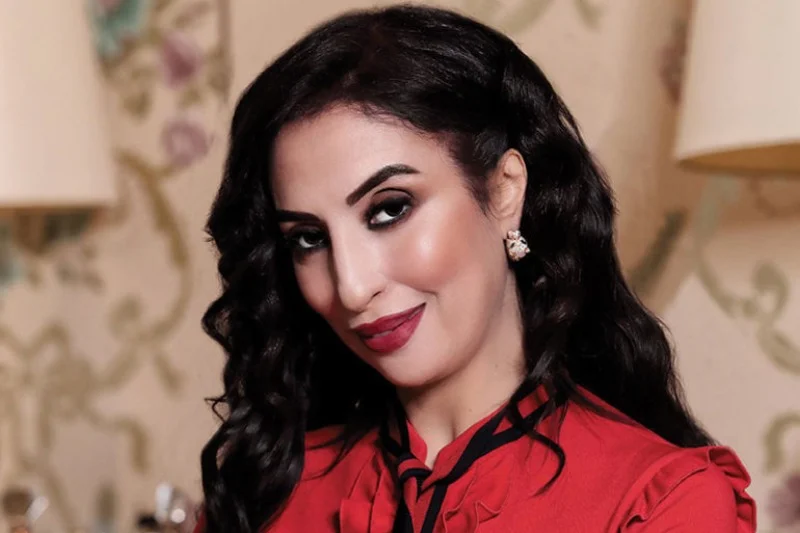
Editorial portrait of Salwa Idrissi Akhannouch in a red blouse.

Editorial portrait

05

2009–2011
Morocco Mall

A ten-hectare development on the Casablanca Corniche.

Morocco Mall opened on 1 December 2011. It was developed as a joint undertaking involving AKSAL, Nesk Investment and the Akhannouch family, with AKSAL holding a 50 per cent stake, and represented an investment reported at around €175 million — approximately 250 million US dollars — across a ten-hectare site on the city’s Atlantic seafront.

The architecture was by Design International, led by Davide Padoa. The completed development houses more than 350 retailers across three levels, with over 5,000 parking spaces. Its anchor tenants and attractions included a Galeries Lafayette store — the subject of an agreement signed with the French group’s president, Philippe Houzé — alongside Fnac, a large complement of international luxury mono-brand stores, and Aquadream, a one-million-litre aquarium holding more than forty species, through which visitors can travel in a cylindrical viewing tank.

The project was recognised repeatedly by the international property industry: Best Shopping Centre at MIPIM in 2012, Best Retail & Leisure Development at MAPIC in 2012, a Gold award in the ICSC Design & Development programme in 2012, and Best Retail Development in Africa at the African Property Awards in 2011. It also holds a Guinness World Record for the largest in-store shop facade.

Its opening was marked by a concert from Jennifer Lopez, an event that drew international coverage and, in effect, announced Casablanca as a retail destination to an audience well beyond Morocco.

06

2011
Academy

Building the workforce the market did not have.

AKSAL Academy was founded in 2011, in the same year Morocco Mall opened, and the pairing is the most instructive single fact in the group’s history.

A development of that scale creates thousands of retail roles more or less overnight. In a market where organised retail was barely a decade old, the skills those roles required — visual merchandising, stock and inventory discipline, luxury clienteling, service protocol, centre management — simply did not exist in sufficient quantity. The group could either accept a permanent standards gap, or manufacture the workforce itself.

The Academy offers training programmes in retail, services and mall management. Its effect is structural rather than charitable: it converts retail employment from casual, low-progression work into a defined career with recognised competencies, and it gives the group a supply of managers who have been trained to the standards its brand partners contractually require.

07

2016–2017
Digital & own brand

Two moves that changed what the group was.

AKSAL Digital was established in 2016 as the group’s omni-channel division, built to connect physical store networks with online discovery and purchase. The reasoning was straightforward: consumers were beginning their journey on a screen and finishing it in a store, or the reverse, and a retail group that could not see both halves of that journey was operating with incomplete information.

The following year brought a more fundamental shift. In 2017 the group launched Yan&One, a beauty and cosmetics brand of its own, with a flagship store in Morocco Mall and a “smart” retail format using digital screens in place of conventional shelf merchandising. AKSAL Cosmetics also operates Sephora in Morocco.

Distributing another company’s brand and owning one are different businesses with different economics. A franchisee earns a margin on someone else’s intellectual property; a brand owner keeps it. Yan&One marked the point at which the group stopped being purely a representative of international brands and became, in part, a creator of one.

08

2020s
Recognition

External assessment, and what comes next.

The 2010s and 2020s brought sustained international recognition. She was ranked eighth among the 100 most powerful Arab businesswomen by Arabian Business in 2015; received the Arab Woman of the Year Award for Achievement in Business in 2016; was named among the Most Influential Women in Business in Africa by The Africa Report and described by OZY as “Morocco’s Leading Lady of Luxury Goods” in 2017; entered the Business of Fashion’s BoF 500 in 2018; appeared in Forbes’ top ten “Women Behind Middle Eastern Brands” in 2020; and was ranked 23rd on Forbes Middle East’s 100 Most Powerful Businesswomen list in 2025.

The group’s own direction has continued to move. AKSAL Developments has announced a series of smart lifestyle and social-shopping projects in Marrakech, Rabat and Bouskoura — formats that blend retail with leisure and public space rather than treating shopping as a self-contained activity. In 2023 a new company, AKS Mode, was registered in the Casablanca trade register on 31 July, specialising in hospitality, catering and fast food.

Read together, these are the moves of an operator responding to the same shift affecting retail everywhere: the shopping centre as a pure transaction venue is in decline, and the destinations that survive are the ones that give people a reason to be there that has nothing to do with buying anything.

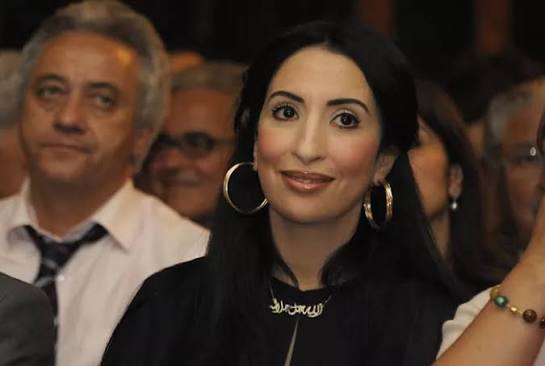
Salwa Idrissi Akhannouch seated among the audience at a public event.

At a public event

Studio portrait in a cream jacket with a pearl necklace.

A note on sourcing

What this biography does and does not claim.

Every date, figure, agreement and distinction on this page is drawn from published encyclopaedic entries, international business press and industry award records. Where sources differ — on the exact investment figure for Morocco Mall, for instance, or on the precise count of franchised brands — the range reported by credible outlets is given rather than a single number presented as definitive.

No quotations are attributed to Salwa Idrissi Akhannouch anywhere on this site, because no verified first-person statement was available at the time of writing. Personal details beyond those already a matter of public record are not included.